

In the fading light of a banknote’s final exchange, a faint fingerprint remains — evidence of what may be the last truly private transaction. That ghostly impression speaks to something we’re losing: the freedom to spend without surveillance. Digital innovation promises efficiency and inclusion, yet quietly erodes financial autonomy — one of humanity’s oldest freedoms.
Sponsored by American Alternative Assets
They said it would “modernize” our financial system.
But the truth? The so-called Digital Dollar isn’t progress — it’s a trap.
Once it launches, the government could:
Track and control every cent you spend
Freeze your account with one click
Dictate what you’re allowed (or not allowed) to buy
This isn't a theory. It’s already happening behind closed doors. And millions of hardworking Americans will be blindsided.
The good news? You still have time to protect yourself — if you act before the switch flips.
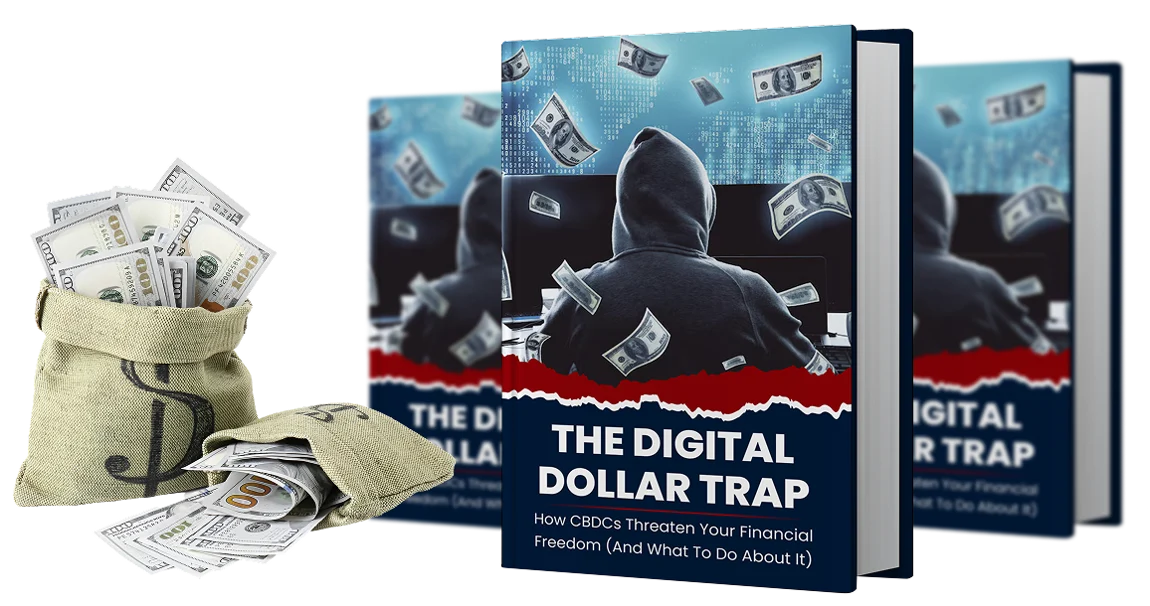
That’s why we put together an urgent guide: The Digital Dollar Trap.
Inside, you’ll learn exactly what this means for your savings — and the smart moves you can make now to stay two steps ahead.
Don’t wait until the trap snaps shut. Once it’s official, it’ll be too late.
From Shadows to Surveillance
The journey from private money to monitored transactions began long before blockchain technology entered our vocabulary. Physical cash and bearer bonds—anonymous debt securities owned by whoever possessed them — once offered complete financial privacy, functioning much like the banknotes we still use today.
This anonymity was not accidental but foundational. As banking historian Charles Kahn observed in 2005, "the key social function of cash is to protect the purchaser's identity". Yet this perspective has shifted dramatically.
The erosion accelerated through regulatory necessity. This shift accelerated through regulation — from the Bank Secrecy Act in 1970 to post-9/11 laws that normalized identity checks and transaction reporting as a condition of participation in finance.
What was once viewed as legitimate financial privacy increasingly became viewed as suspicious opacity.

The Programmable Future
Central Bank Digital Currencies represent the next evolution in this transformation, offering unprecedented capabilities for both efficiency and oversight. Unlike traditional electronic payments that move through private networks, CBDCs operate as direct liabilities of central banks—digital versions of sovereign money itself.
The Federal Reserve's research through Project Hamilton has explored technical frameworks for a potential digital dollar, while China's e-CNY has become the world's largest CBDC pilot, with transaction volumes reaching 7 trillion yuan by 2024. The European Central Bank has entered a preparation phase for a digital euro, establishing partnerships with technology providers and conducting extensive stakeholder consultations.
What distinguishes CBDCs from existing electronic payments is their programmability. As financial technology analyst Nick Stanescu notes, these systems can embed spending conditions directly into the currency itself. China has already tested digital yuan with expiration dates to stimulate consumption, while other pilots have explored geographic restrictions and purpose-specific limitations.

The Trust Equation
For people managing their savings or planning for retirement, this transition carries profound implications that extend beyond technical specifications. The International Monetary Fund has identified a fundamental trade-off: while CBDCs could improve financial inclusion and payment efficiency, they also create new risks around privacy and state surveillance.
European Central Bank research acknowledges that "full anonymity may have to be ruled out" in CBDC design, though officials emphasize their commitment to privacy protection for small-value transactions. The Bank for International Settlements has been more direct, stating that "full anonymity is not plausible" for any CBDC implementation.
This represents a categorical shift from cash, which provides complete anonymity for all transactions regardless of size. As privacy researcher Alex Gladstein observes, "cash is an excellent privacy tool, capable of fully anonymous transactions". The question becomes whether digital alternatives can preserve even a fraction of this autonomy.
Trust, rather than technology, emerges as the crucial variable. Survey research by the Bank for International Settlements reveals that privacy concerns significantly affect public willingness to adopt CBDCs. European Central Bank polling found that 41% of respondents consider privacy protection the most important characteristic for any digital euro.
For those managing portfolios or retirement plans, programmable oversight could redefine how wealth is stored and transferred. The ability to make personal financial decisions without continuous oversight—what was once simply called economic freedom—risks becoming a privilege rather than a right.
The Compass Ahead
The fingerprint on our imaginary banknote will soon fade entirely, taking with it the last traces of truly private exchange. Yet this need not represent only loss. The European Central Bank's innovation platform has brought together nearly 70 market participants to explore how digital euros might foster innovation while preserving essential freedoms. Their work suggests that conditional payments and programmable features, when carefully designed, could enhance rather than restrict financial autonomy.
The key lies in recognizing that innovation need not destroy trust—but it invariably tests it. The central banks developing CBDCs today hold extraordinary responsibility to balance efficiency with liberty, transparency with privacy, and progress with principle. Their choices will determine whether programmable money becomes a tool of empowerment or control.
The future of money is being written now — in code, in policy, and in public trust. The last private transaction may be ending, but a new era of conscious financial design could yet begin, if those guiding it remember what must never be lost.

Independent Thinking. Steady direction.
